
Valentine’s Day and Sexual Health: Why STI Testing Matters Before Intimacy
Blog

Dr Tan Kok Kuan
Men’s Health & Sexual Health Doctor
MBBS (S’pore), Cert. Men’s Health, Cert. Clinical Dermatology,Member, Academy for Men’s Health (Singapore)Member, Singapore Association for the Study of ObesityMember, International Society of Sexual Medicine

Valentine’s Day is fast approaching! As always, many young couples are eager to plan out romantic date nights, with dinner reservations, bouquets of flowers and heartfelt gifts. However, if you’re preparing for moments of intimacy, taking simple precautions can help both of you feel safer and more at ease.
Many couples may have a prior sexual history before meeting one another. As your relationship progresses, it can be helpful to take a brief pause to consider sexual health. Undergoing testing for sexually transmitted infections (STIs) before becoming intimate is a proactive step that supports personal well-being and helps protect both partners.
When Should Someone Get STI Tested?
There are several situations in which STI testing is recommended. While sexual activity is the most common reason, some important factors may be completely unrelated to intimacy:
- If you have had unsafe sex: Engaging in sexual activity without barrier protection, such as condoms, may increase the risk of STI transmission.
- If you have been sexually active with more than one partner: Having multiple sexual partners can raise the likelihood of contracting an STI, as each partner has their own sexual history and potential points of exposure.
- If a previous sexual partner has tested positive for an STI or STD: Some STIs may remain asymptomatic for long periods of time. If a former sexual partner tests positive for one, it is possible that you may have contracted it as well, despite a large time gap in contact.
- If you have experienced a blood transfusion or medical procedure overseas: Exposure to improperly screened blood products or unsterilised medical equipment may carry the risk of infection. Certain infections and diseases that are transmissible by blood can also be spread by sexual contact. As healthcare regulations and screening standards differ across regions, it may be worthwhile to pursue an STI test if you have undergone a medical procedure overseas.
- If you have been pierced by a needle or received a tattoo: Similarly to medical procedures, exposure to needles in unregulated settings can pose a risk of transmitting bloodborne diseases and infections. STI testing can help ensure your health and safety following such exposures.
Why Are STI Tests Important?
Regular STI testing allows individuals to take timely action, protect their partners and maintain their own health. These screenings allow you to:
Identify Asymptomatic STIs
A large proportion of STIs do not show symptoms in the early stages, which means individuals may be unaware they are infected. Without testing, these infections can remain undetected and be unintentionally passed on to others. Routine screening helps identify asymptomatic STIs, so that your doctor can begin the treatment process.
Seek Early Treatment
When these infections are detected early, STI treatments are often simpler and more effective. For example, certain bacterial STIs such as chlamydia and gonorrhoea can usually be treated with a short course of antibiotics before their symptoms cause further discomfort. Prompt medical care can help clear infections more quickly, lower the chances of further transmission and reduce the risk of complications.
Prevent Future Complications
Living with an STI for an extended period can lead to future complications. STI testing is especially important for individuals who are pregnant or planning to conceive. Certain infections can be passed from mother to baby during pregnancy, childbirth, or breastfeeding, potentially leading to complications such as premature birth, low birth weight, or developmental issues. In some cases, untreated STIs may also increase the risk of miscarriage or stillbirth.
Early screening allows for timely treatment, reducing the likelihood of transmission and supporting healthier outcomes for both parent and child.
Common Symptoms of STIs and STDs
The following symptoms may be caused by STIs/STDs at varying levels of severity:
- Unusual discharge from the vagina or penis
- Abnormal bleeding from the genitals
- Redness and itching in the pubic region
- Sores, warts, rashes or blisters around the genitals, mouth, or rectum
- Painful urination
- Pain during intercourse
- Swollen lymph nodes in the neck
- Lower abdominal pain
If you experience these symptoms, particularly after becoming sexually active or engaging in intimacy with a new partner, it may be an indication of an STI.
How Are STIs Tested?
STI testing is generally straightforward and causes little to no discomfort for most individuals. Common testing methods include urine samples, swabs, oral or throat samples and blood tests. Swabs may be taken from the genital area, throat, or rectum, depending on potential exposure, while blood tests are typically used to detect certain infections such as HIV or hepatitis.
Test results are usually available within a few days. In some cases, same-day or rapid testing options may also be available, allowing individuals to maintain peace of mind just in time for their Valentine’s date night.
Regardless of the testing method, STI screening is designed to be a safe, confidential, and routine part of sexual healthcare.
Private STD/HIV Screenings at Dr Tan Medical Center
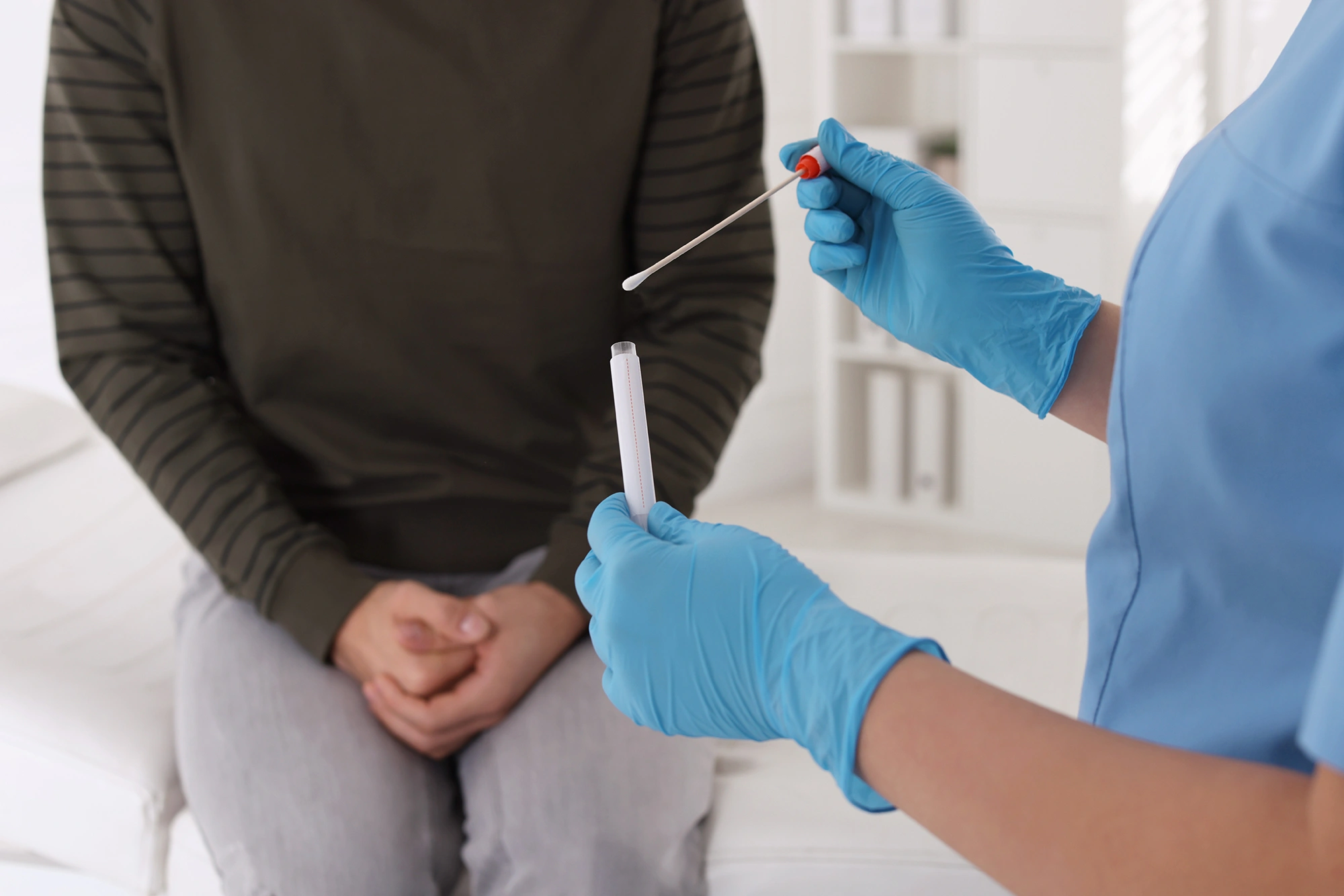
Conversations around sexual health can feel personal and sometimes even uncomfortable, but they are an important part of caring for yourself and those close to you. Taking care of your sexual health is an important part of your overall well-being and a show of mutual respect when you’re in a relationship.
At Dr Tan Medical Center, we are committed to providing discreet, professional, and timely STD/HIV screenings that are performed with your privacy in mind. Our committed doctors, Dr Tan Kok Kuan and Dr Matthew Tan, have extensive experience in sexual health and are committed to offering clear guidance, confidential care and appropriate follow-up based on your individual needs.
Contact us today so we can guide you through the process and help you take the next steps with confidence.

Meet Our Men’s Health Doctor
Dr Tan Kok Kuan
MBBS (S’pore), Cert. Men’s Health, Cert. Clinical Dermatology, Member, Academy for Men’s Health (Singapore) Member, Singapore Association for the Study of Obesity Member, International Society of Sexual Medicine

Dr Tan Kok Kuan is an experienced doctor specialising in men's health, sexual health and medical weight loss. With over 20 years of clinical experience, he offers confidential and effective screening and treatment services. Notably, Dr Tan was one of the key authors of Singapore’s National HIV PrEP Guidelines and the national blueprint to end HIV transmission by 2030. Dr Tan frequently speaks at local and international conferences and has been featured in the media, where he helps raise public awareness around men’s health and sexual health.
“Every patient deserves our fullest attention.”

10 Sinaran Drive #09-30, Novena Medical Centre, Singapore 307506
Tel: (+65) 6513 0359 | WhatsApp: (+65) 9750 5037
Operating Hours:
Monday to Friday: 8:30 AM to 6:30 PM
Saturday: 9:00 AM to 2:00 PM
Closed on Sundays and Public Holidays


